Television
https://www.thoughtco.com/color-television-history-4070934
https://wonderopolis.org/wonder/Who-Invented-the-First-TV
https://blog.technavio.com/blog/largest-tv-manufacturers-by-market-share
https://www.antiwar.com/
The fact that we need to find obscure, third-party sites to find stark anti-war voices is honestly a mystery to me. You could ask practically anyone randomly on the street if they are anti-war and I would be willing to bet that they would say yes. I have two theories why we never hear about it though. The first, and what I hope is the correct one, we are in an era where all out war (at least in the United States) is a thought that does not cross anyone's mind. If asked whether or not we should declare war on another nation, the answer is almost always no. I say almost because there is will always be someone in favor of it. Basically, there is no need to talk about it because it is not an issue at the moment. But regardless, while there are smaller conflicts around the world, they are smaller disputes and have not lead to all out war. not to mention that as long as humanity exists, people will disagree to some capacity. My second theory, and one I hope is not correct, is that more people than we know are actually in favor of it, just not willing to say it out loud in public. Perhaps some people are just avoiding the anti-war questions until they get in power. Now, I do not mean this as a kind of conspiracy theory idea, it is just a thought I had concerning the possibilities.
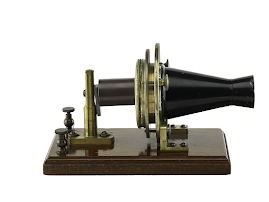
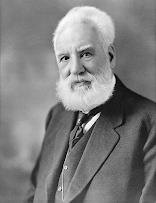
The telephone has become an incredibly integral part of our everyday lives. So much so, that when we lose our cell phones or even internet access, many of us almost go into a panic because we can no longer communicate with the outside world so easily. At least with our close friends and family, not the general public. That ease of access is what has shaped the modern world as we know it, and much of it is thanks to our cell phones. All within the palm of our hand, we can contact almost anyone on Earth, surf the web, play games, and sometimes even work. But we would never have this technology if it wasn't for Alexander Graham Bell, inventor of the first telephone. Bell's model of the telephone was first patented on March 7th, 1876, and to this day is one of the most valuable patents ever made. Only five days later after it was patented, on March 12th 1876, Bell conducted his first presentation of the device and transmitted speech. From that day forward, the world was changed forever. The days of waiting for a letter to slowly arrive from someone you desperately needed to contact were about to phased out. Not only would the entire world start to be connected because of this amazing new technology, but it would only improve over time. Companies would come up with their own designs for phones after the rights for producing your own phone models were made public, and hundreds of improvements would be made. Phones would become smaller, could reach farther across the world, were made portable, cameras were added, games, the internet. As stated before, the world would eventually revolve around the use of phones. Now, it is very strange to see someone who is not a small child to not have a phone and still be a functioning member of society. Not to say that it is impossible, but it is rare. "Just give me a call" or "Just text me" are such common phrases that we don't even think twice about other forms of communication. They have not only improved convenience, but safety. Phones have provided a method for preserving evidence like not many others before it, and have made solving important cases much easier. Also, contacting law enforcement, with the press of a single button, we can get in contact with law enforcement and emergency services, making our lives much safer. So, as said multiple times, phones have made an irreplaceable impression on our day to day life.
https://www.businessinsider.com/history-phone-photos-2017-6#in-the-1930s-famed-industrial-designer-henry-dreyfuss-created-what-many-consider-to-be-the-first-modern-telephone-the-model-302-its-design-signaled-a-departure-from-earlier-models-the-ringer-is-in-the-phone-instead-of-a-separate-component-the-cradle-lies-horizontally-and-you-speak-and-listen-to-the-same-piece-resting-on-top-2

https://www.youtube.com/watch?v=LrxwTUWZ6Xc
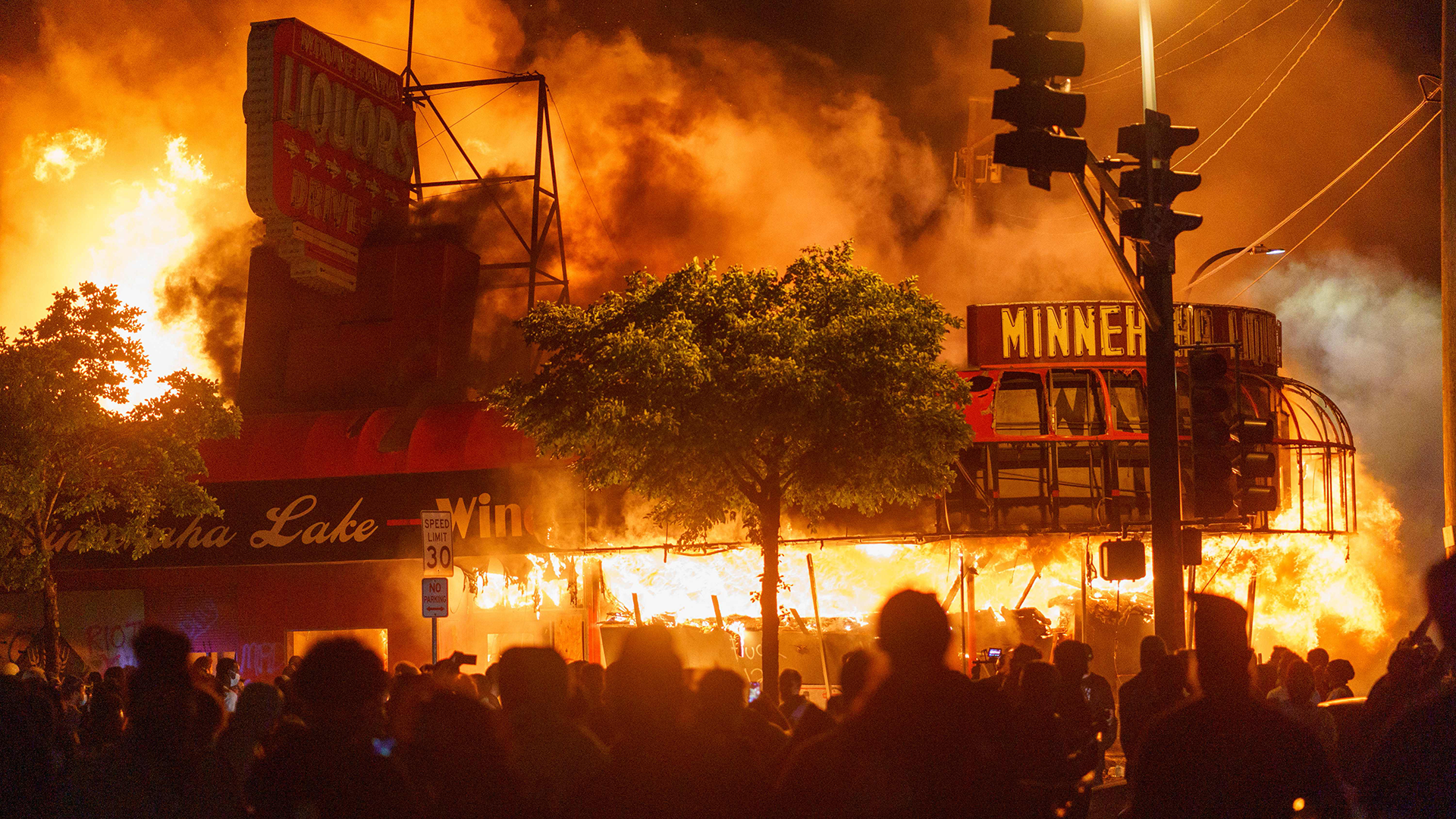
With all the chaos that is going on in the world right now, the First Amendment has been one of the biggest points of discussion in the U.S. as of the past few months. The First Amendment lists 6 specific freedoms: From and Of religion, of press, of speech, of petition, and of peaceful assembly. Whenever the riots begin and buildings start being burned to the ground, "First Amendment!" is what is claimed by those committing these crimes. They primarily argue about their right to assemble, however, many seem to forget that it specifically lists "peaceful" assembly. The second an assembly starts endangering others, it is not protected by the First Amendment. To be even more specific, doing something like burning someone's business down, is infringing on their rights of life, liberty, and property. The First Amendment's protection end once another's rights begin to be infringed upon. Even if one were to look beyond the First Amendment, arson and looting are pretty clearly under the classification of crime. So, committing such acts are not even a concerned with the First Amendments and personal rights anymore. it is simply committing crimes and putting others in danger, which is not protected by the First Amendment and certainly not legal in any sense of the word. As was said so accurately by Supreme Court Justice Oliver Wendell Holmes Jr.: “Your right to swing your fist ends where the other guy's nose begins.” You do not have the right to infringe on another's rights without due process of law and due cause.
SCOTUS, The Supreme Court of the United States. Despite its extravagant name, it did not start out so powerful. When it was initially formed, not only were there only a few judges, but there were no worthwhile cases. In fact, during its first term, the court did not preside over any cases, it was all to work out the logistics of official proceeding and workings of the court. Also, not until a while after its establishment, did it actually acquire any power to put important laws into effect. However, once everything involving the Supreme Court's power and logistics, it became an extremely important part of the federal government. Not only was it another layer to the checks and balances system, as to help keep the other branches of government in check, but it would become the final deciding factor concerning many influential issues and cases. Some of those cases would shape the future working and interpretations of the laws and constitution, shaping the entire country as we knew it. The Supreme Court eventually became the branch of government that the public would turn to whenever it was totally divided on issues from lower courts. Issues that no lower court could solve, and they needed to invoke the ultimate interpreting authority of the Supreme Court. So, from a small room with only a few people talking about how they should interpret the laws of a new country, to an extremely important court that must delicately interpret what the laws mean in relation to the constitution, and apply them to cases that reach it.
https://www.supremecourt.gov/about/historyandtraditions.aspx
I would say my online presence is very small. Mainly due to the fact that I really only converse online with close friends that I know...